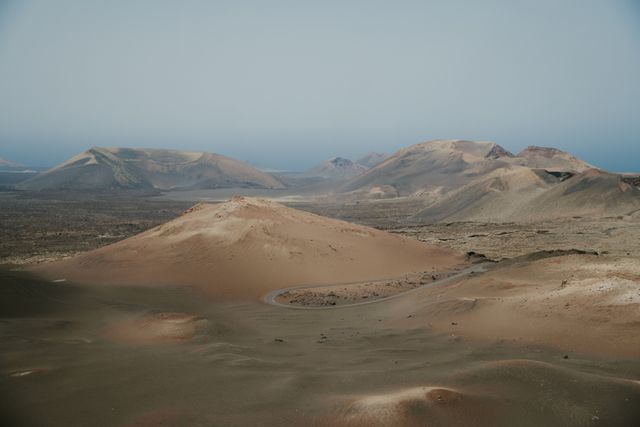
When visiting the island of Lanzarote, Spain, a must on any itinerary is Timanfaya National Park. This iconic park was shaped by volcanic eruptions that left their mark; you’ll see craters, slopes, lava remains and much more.
Read on to find out how to buy tickets, the best time to go, and routes for getting there.
What Is Timanfaya National Park?
Timanfaya National Park is a protected volcanic area; its distinctive landscape is the result of volcanic eruptions that took place in the 18th century. It’s located in the southwest of the island of Lanzarote, Spain, and covers just over 51 km².
Its rugged terrain is made up of volcanic cones, lava flows, volcanic ash and scoria, all set against a striking palette dominated by reds, ochres, browns, blacks and oranges.
How Timanfaya Was Formed: The 1730s Volcanic Eruptions
What is now known as Timanfaya National Park was formed between 1730 and 1736, following an extensive volcanic eruption that opened more than 30 craters and left roughly a quarter of the island’s total surface buried under lava and ash. This natural phenomenon transformed the landscape, creating the geological formations that have become one of its main tourist draws today.
Why It’s Called the Fire Mountains (Montañas del Fuego)
The park takes its name, the Fire Mountains, from its craters and slopes covered in lava remains and ash, as well as from the powerful release of heat from deep within the Earth — geothermal activity that can still be felt on-site today.
What to See and Do in Timanfaya
A visit to the park is one of Lanzarote’s most important attractions, where you’ll not only take in the striking volcanic landscape but also witness the Earth’s internal geothermal activity in real time.
The Route of the Volcanoes (Ruta de los Volcanes)
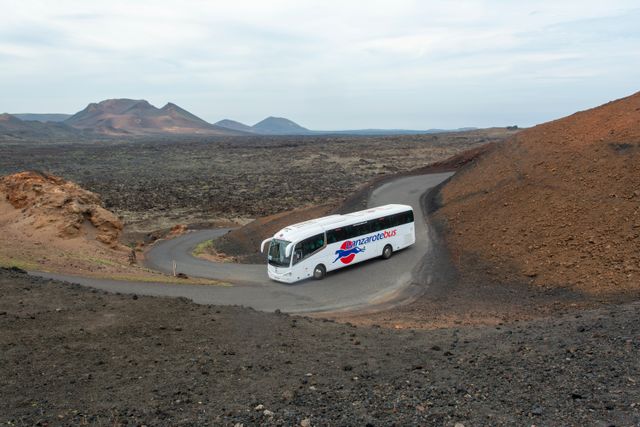
The Route of the Volcanoes is the park’s main attraction and the only way to see it, since visitors aren’t allowed to walk freely through the protected area. It’s done by coach, taking between 35 and 40 minutes to cover a distance of 14 kilometres. Along the way, you’ll see craters, lava flows, «jameos» (collapsed lava tubes) and volcanic tubes.
Geothermal Demonstrations at Islote de Hilario
Islote de Hilario is a small volcanic outcrop surrounded by a sea of solidified lava, where guides demonstrate the intensity of the residual heat to visitors through artificial geysers, pouring cold water into metal tubes buried in the ground, which comes back out as steam. Another demonstration shows the power of the energy beneath the surface: dry branches are placed in an open pit and catch fire instantly.
Camel Rides at the Park Entrance
At the park entrance you’ll find the Echadero de Camellos (camel park), where you can take a 20- to 25-minute ride on camelback. The ride takes place within an authorised area of the protected zone and lets visitors enjoy the volcanic scenery, the ash-covered slopes and the striking colour contrasts typical of the area.
El Diablo Restaurant: Cooking with Volcanic Heat
El Diablo Restaurant is the only place in the park where you can eat or drink. Its kitchen makes use of intense heat coming from deep within the earth.
César Manrique’s Design and the Geothermal Grill
El Diablo was designed by César Manrique, the renowned local architect, in 1970, blending the building’s circular shape with the park’s volcanic surroundings. Manrique designed a grill that cooks food directly using heat from the geothermal well, which reaches temperatures of up to 450°C.
Do You Need to Eat There to Visit the Park?
No, eating at the restaurant isn’t compulsory to visit the park; you can still pop in to buy a drink or a souvenir from the shop.
Tickets and How the Visit Works
To plan your visit to the park, you need to buy tickets online; alternatively, you can book guided excursion services through specialist companies.
How to Book Tickets Online
Tickets can only be bought online, through the official CACT Lanzarote website; they are not sold at the park’s ticket office. When booking, you select the day and time of your visit, which should be done well in advance due to high visitor numbers.
What’s Included in the Entrance Fee
The entrance fee includes the coach tour along the Route of the Volcanoes, the geothermal demonstrations and access to the César Manrique facilities (the souvenir shop and El Diablo Restaurant); it does not include food or drink.
Can You Visit Without a Guided Bus Tour?
No, as it’s a protected area, visitors aren’t allowed to explore the park independently or without a guide. The only way to see it is on the guided tour aboard the park’s official coaches.
How to Get to Timanfaya National Park
To get to Timanfaya, the safest, quickest and most convenient option is usually to book a direct transfer from Lanzarote Airport.
From Puerto del Carmen, Costa Teguise and Playa Blanca
If starting from Playa Blanca, the journey takes around 20 minutes: take the LZ-2 towards Yaiza, then the turn-off to Timanfaya via the LZ-67.
From Puerto del Carmen, take the LZ-504 towards Tías, then the LZ-2 south towards Yaiza, before joining the LZ-67. This journey takes an average of 25 minutes. From Costa Teguise, the journey takes around 40 minutes: take the LZ-14 and LZ-3, then the LZ-20 towards San Bartolomé, connecting to the LZ-56 towards Mancha Blanca, before finally joining the LZ-67.
Is There Parking at the Visitor Centre?
Yes, the visitor centre has free parking for visitors.
Best Time to Visit and What to Bring
Although Lanzarote enjoys a subtropical climate all year round, the best times to visit the park are spring and autumn.
Avoiding Queues and the Midday Heat
It’s best to arrive early in the morning or go later in the afternoon and to bring everything you’ll need for the visit. This will help you avoid the extreme heat and the midday queues. The recommended times to visit are between 9:00 and 10:00 am, or between 3:00 and 4:00 pm, when there are fewer visitors.
What to Wear on the Volcanic Terrain
It’s recommended to wear trainers or hiking shoes, light clothing and a windbreaker, along with sun cream and plenty of water.
Frequently Asked Questions About Timanfaya National Park
How Long Does the Visit Take?
The visit takes around an hour and a half, including the coach tour, the geothermal demonstrations and time at the visitor facilities.
Can You Walk Freely Around the Park?
No, walking freely around the protected area isn’t allowed due to its ecological value, the safety risks from high temperatures and the fragility of the terrain.
Is Timanfaya Suitable for Children?
Yes, the park is ideal for a family visit; children will love the moon-like landscape, which really captures their imagination.
Is the Volcano Tour Worth It?
Yes, it’s well worth visiting the park; you’ll see unique landscapes found nowhere else in Europe.
Final Thoughts: Planning Your Trip to Timanfaya
Plan your trip to Timanfaya National Park: it’s an experience well worth having, offering a landscape unlike anywhere else in Europe and a chance to feel the power of nature up close. Book your tickets in advance and prepare everything you’ll need for the visit. Weigh up your options carefully, and consider booking a transfer company that will not only guide you through the park tour but also take you to see the island’s other iconic sights.
References
- https://cactlanzarote.com/en/centre/fire-mountains-timanfaya/
- https://www.spain.info/en/nature/timanfaya-national-park/
- https://turismolanzarote.com/en/visiting-the-timanfaya-national-park/
- https://www.miteco.gob.es/es/parques-nacionales-oapn/red-parques-nacionales/parques-nacionales/timanfaya/valores-naturales/parque-geologico.html
- https://www.gobiernodecanarias.org/parquesnacionales/timanfaya/el_parque/valores_naturales/
Specialist in the tourism sector of the Canary Islands with a proven track record in experience management in Lanzarote. My work has always focused on promoting iconic destinations and optimizing transfer and excursion services on the volcanic island.
